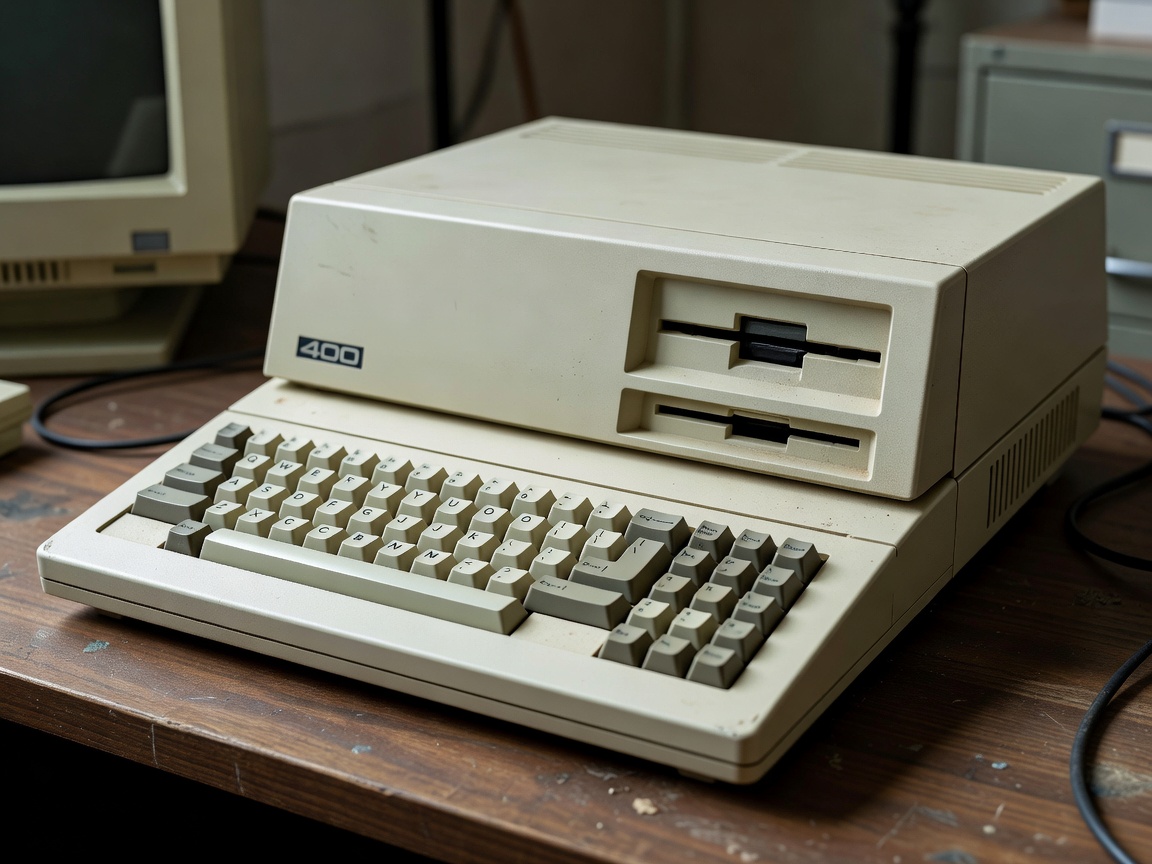
Before computing power became ubiquitous and invisible, a computer was a distinct, physical presence in a room. The classic computer era, roughly spanning the late 1970s through the early 1990s, was characterized by rapid, highly visible innovation. The transition from massive corporate mainframes to desktop microcomputers fundamentally altered human interaction with technology, spawning new industries and subcultures along the way.
The 8-Bit Pioneers
The dawn of home computing was dominated by 8-bit microprocessors like the MOS Technology 6502 and the Zilog Z80. Because memory was incredibly expensive and storage relied on slow audio cassettes or low-capacity floppy disks, programmers had to write code with severe constraints. This limitation bred immense creativity.
Systems of this era often integrated the keyboard and the main logic board into a single chassis. You would plug the unit into a standard television set via an RF modulator, and upon powering up, you were greeted not by a graphical desktop, but by a blinking cursor on a command line interface. Learning basic programming wasn't just a hobby; it was often a prerequisite for doing anything useful with the machine. Typing in programs line-by-line from the back pages of computing magazines was a common weekend activity for enthusiasts.
The Transition to 16-Bit and Beyond
As the 1980s progressed, architectures moved to 16-bit processors (like the Motorola 68000), allowing for vastly more memory addressing and paving the way for graphical user interfaces (GUIs). This era saw the computer split into the form factor we recognize today: a separate monitor, a central processing unit tower or desktop case, and detached input devices like the mouse.
This period also saw intense architectural fragmentation. Unlike today, where nearly all desktop software is written for a few standardized operating systems on x86 or ARM architectures, the 80s and 90s featured wildly incompatible systems. Software had to be written specifically for one brand's proprietary architecture, leading to fierce brand loyalty and intense rivalries between user bases.
Key Technologies of the Era
- CRT Monitors: Cathode Ray Tube displays defined the visual aesthetic of the era. Heavy, deep, and utilizing a scanning electron beam to excite phosphors on a glass screen, CRTs produce a distinct image texture. The natural blurring and scanlines of a CRT were often utilized by graphic artists to blend pixels and create the illusion of more colors than the hardware could actually display.
- Mechanical Keyboards: Before the mass adoption of cheap rubber dome membrane keyboards, computers utilized complex mechanical switches for each key. Utilizing buckling springs or Alps switches, these keyboards provided significant tactile and auditory feedback and are heavily sought after today for their durability and typing feel.
- Magnetic Storage: From 5.25-inch true "floppy" disks to the hard-shelled 3.5-inch diskettes, physical media was fragile and limited. The mechanical sounds of a floppy drive seeking sectors—the whirring, clicking, and grinding—were the acoustic soundtrack of loading data.
Preservation Challenges
Keeping classic computers operational is a race against time and chemistry. The plastics used to mold the beige cases often contained bromine as a fire retardant. Over decades of UV exposure, this bromine reacts and turns the plastic a sickly yellow or brown. While chemical processes like "Retr0bright" can temporarily reverse this, it highlights the fragility of these materials.
Internally, real-time clock batteries often leak corrosive acid onto motherboards, destroying traces and components. Preservationists must meticulously neutralize this acid, replace damaged capacitors, and often design modern solid-state replacements for mechanical hard drives and floppy drives that have failed beyond repair. The goal is to keep the original hardware running to experience the exact timing, sounds, and visual output as it was originally intended.