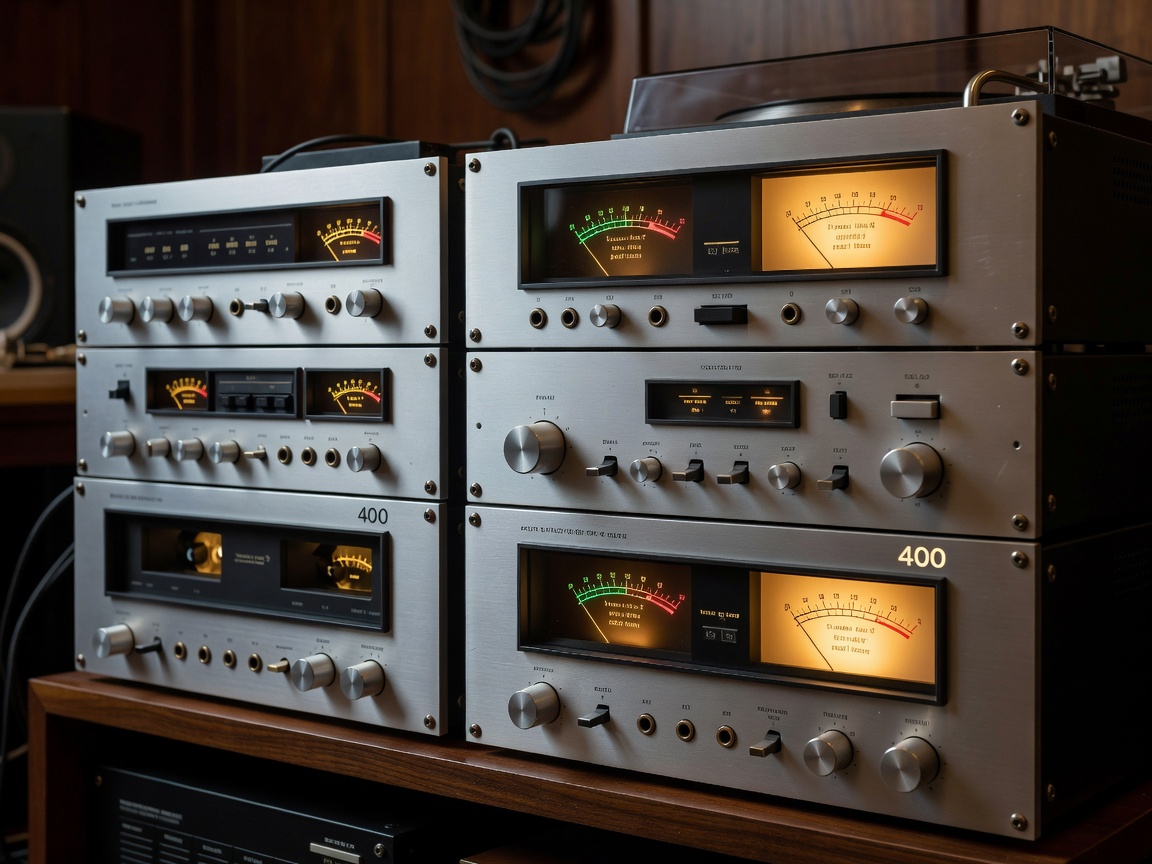
The pursuit of perfect sound reproduction during the mid-to-late 20th century spurred an arms race of engineering and design. Before audio became compressed into digital files and played through invisible smart speakers, hi-fi equipment was meant to be seen, felt, and operated with intent. The tactile feedback of a weighted volume knob, the warm glow of a VU meter bouncing in time with the music, and the mechanical precision of a turntable dropping a needle into a groove created a ritual around listening that modern convenience has largely erased.
The Transition from Tubes to Solid State
In the 1950s and early 1960s, vacuum tubes (or thermionic valves) were the undisputed kings of audio amplification. Tube amplifiers are revered even today for their "warm" sound, a result of even-order harmonic distortion that pleases the human ear. However, tubes run incredibly hot, consume significant power, and degrade over time, requiring periodic replacement.
The introduction of the transistor changed the landscape entirely. By the late 1960s, manufacturers began shifting heavily toward solid-state amplification. This era birthed the "Monster Receivers" of the 1970s. Brands engaged in fierce competition to produce receivers with the highest wattage per channel, resulting in massive, heavy components encased in genuine walnut cabinets with thick, brushed-aluminum faceplates. These solid-state behemoths offered unprecedented reliability and power, capable of driving the large, inefficient multi-driver loudspeakers popular at the time.
Anatomy of a Vintage Setup
A traditional vintage audio stack generally comprises several discrete components, each dedicated to a single task within the signal chain:
- The Turntable: The primary source component for decades. Key differentiators include the drive mechanism (belt drive, direct drive, or idler wheel) and the tonearm geometry. The precision of the motor and the isolation of the plinth dictate how well the turntable prevents unwanted vibrations from reaching the stylus.
- The Receiver / Integrated Amplifier: The heart of the system. A receiver combines a pre-amplifier (which switches inputs and manages volume/tone), a power amplifier (which drives the speakers), and an AM/FM tuner into a single chassis. An integrated amplifier simply omits the tuner.
- Magnetic Tape Decks: Whether cassette decks or the more professional reel-to-reel formats, tape offered the ability to record. High-end cassette decks utilized multiple heads (erase, record, playback) allowing the listener to monitor the recording in real-time, coupled with advanced noise reduction circuits like Dolby B and C to minimize tape hiss.
Restoration and Maintenance
Collecting vintage audio is not without its challenges. Capacitors, critical electronic components that store and release electrical energy, contain electrolytic fluid that dries out or leaks after 30 to 40 years. A complete "re-cap" is often necessary to restore a vintage amplifier to its original specifications and prevent catastrophic failure that could damage connected speakers.
Furthermore, the mechanical switches and potentiometers (the components behind the knobs) become oxidized over time, leading to static and signal loss when adjusted. Careful cleaning with specialized electronic contact cleaners is a mandatory maintenance skill for any vintage audio enthusiast. Despite these maintenance requirements, the robust point-to-point wiring and modular circuit board designs of the era make these units highly repairable compared to today's micro-soldered, surface-mount electronics.
Why Vintage Endures
The resurgence of vinyl records has naturally led to a renewed interest in the hardware originally designed to play them. But the appeal goes beyond just the format. There is an undeniable visual aesthetic—the contrast of silver metal against wood grain, the symmetrical layout of toggle switches, the soft amber or blue lighting of the dial scales. These machines were built as centerpiece furniture for the living room, designed with a level of industrial artistry that commands attention.